Humanoid robot demonstrationOpen original
USC · Week 3
Humanoid Robot
Programming a small humanoid for a simulated search-and-rescue task while working through connectivity and tracking limitations.
WhenSummer 2026
My roleIndependent programming and testing
StatusBehavior demonstrated with limitations
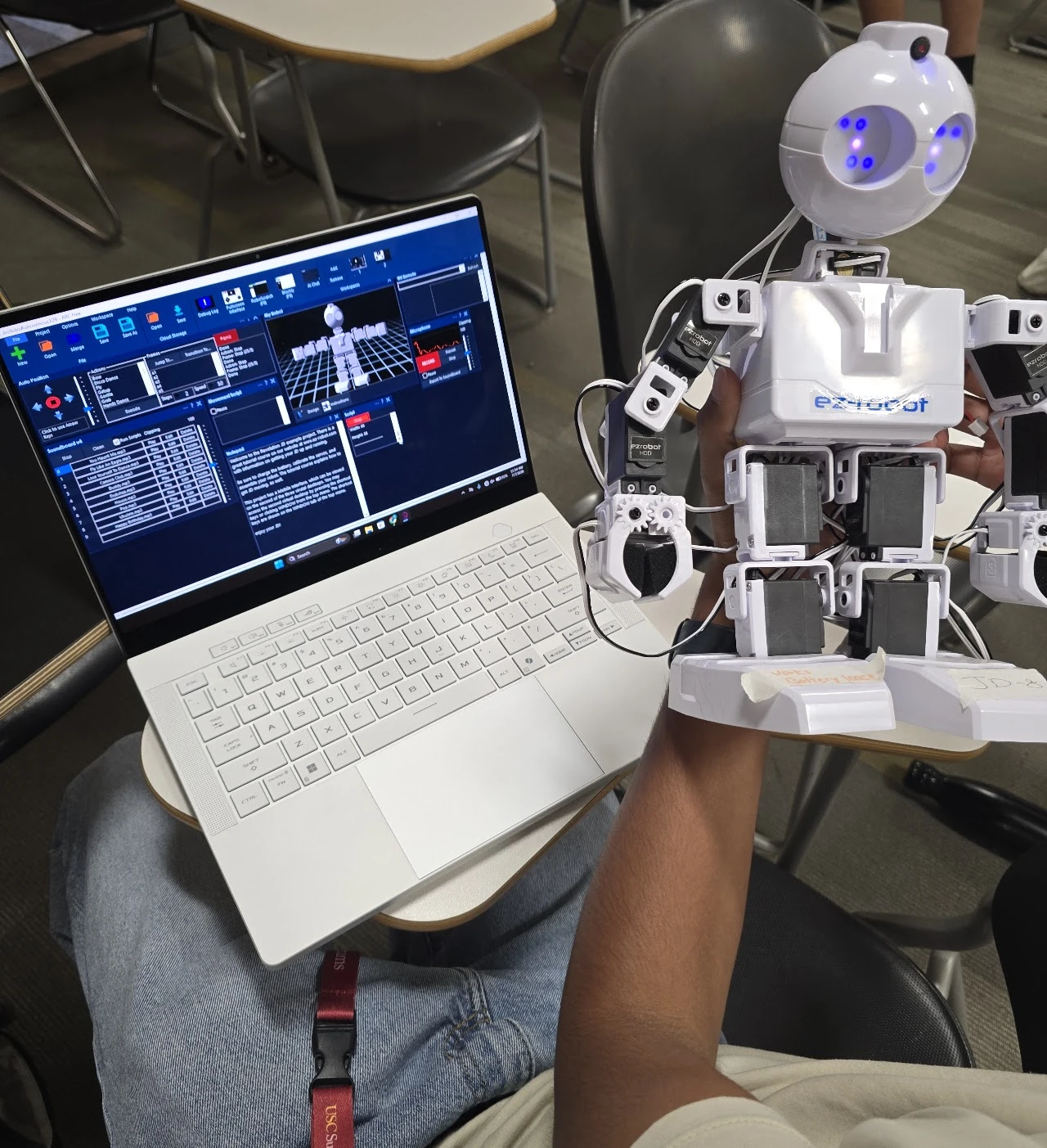
The goal
Program a humanoid for a simulated search-and-rescue task.
My work
Independent programming and testing of the robot behavior.
Hardest problem
Connection problems and inconsistent target tracking.
Result so far
A classroom demonstration was recorded, with those limitations still present.
The project.
I completed the humanoid robot project independently. The task was to identify a victim in a simulated damaged building. The project brought together programmed robot behavior and tracking, with connection problems and inconsistent tracking affecting the final performance.
Simulated rescue
Victim identification in a classroom damaged-building scenario.
Connection + tracking
These affected the consistency of the demonstrated behavior.
Engineering decisions
How it came together.
Give the robot a task
The search-and-rescue scenario gave the programming a concrete purpose: identify a victim within the simulated environment. That made reliable tracking and communication part of the task, alongside the robot's motion.
Work with the limits of the platform
Connectivity and tracking issues made the behavior inconsistent. I continued testing and obtained a demonstration, but the project remained limited by those issues. The recording captures the robot's behavior in the classroom scenario.
Project photographs
A look at the build.
Explore the hardware, design views, and development stages.
- The humanoid platform used for the simulated rescue task.
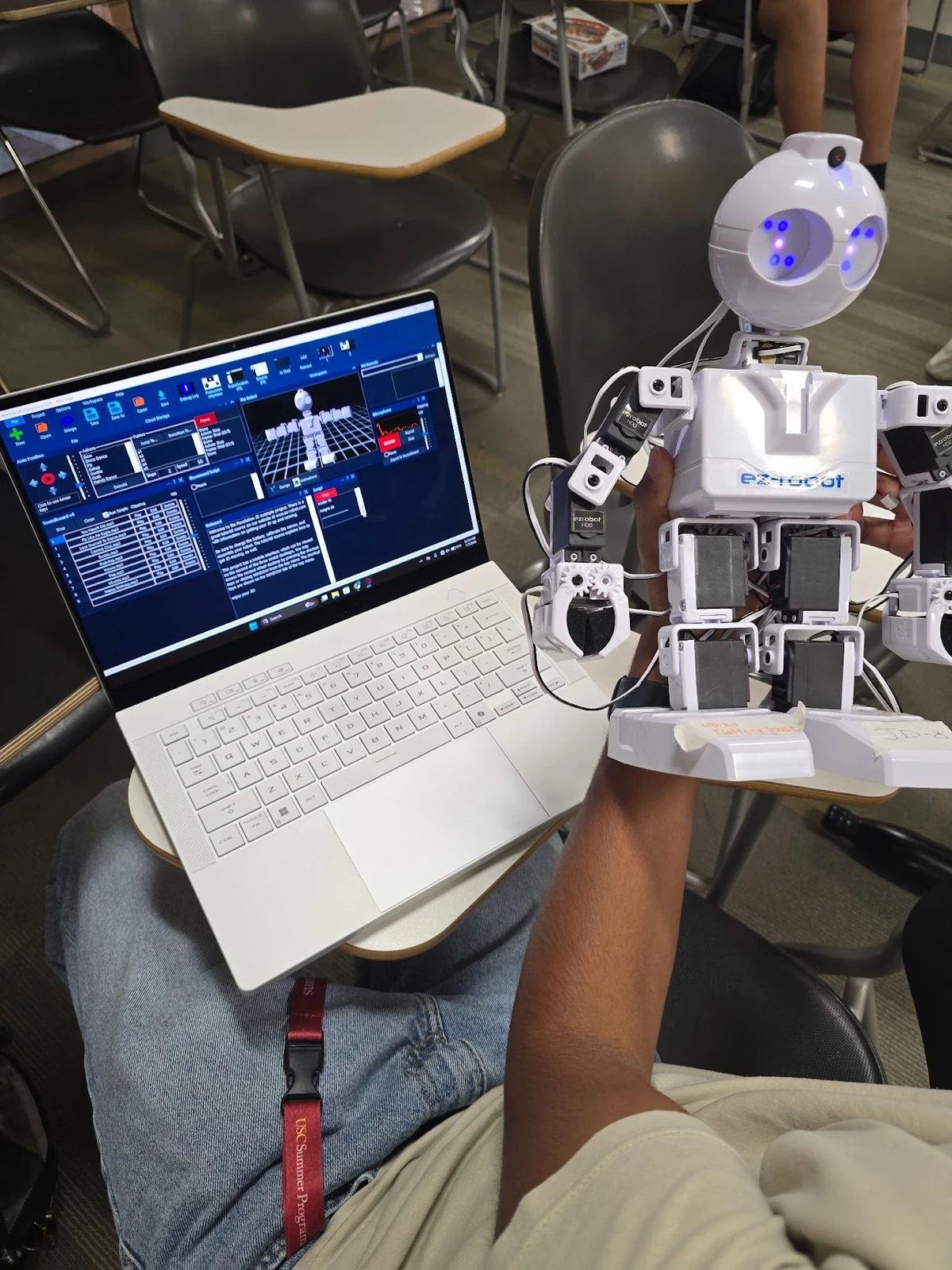
- Developing the robot's programmed behavior.
Demonstrations
See the project
in action.
Original recordings from the USC project documentation.
Play the recordings here, or open them in a separate tab.
Skills developed
Robot programmingTrackingConnectivity troubleshootingTask-based testingIndependent project work