First rocket launchOpen original
USC · Week 4
Single-stage Rocket
Two builds, two launches, and a redesigned nose that turned the first flight into an opportunity to improve the design.
WhenSummer 2026
My roleBuilder · Both design iterations
StatusTwo iterations launched
The goal
Build, launch, and revise a single-stage model rocket.
My work
Built both versions and redesigned the nose after the first launch.
Hardest problem
Turning the first flight into a focused aerodynamic revision.
Result so far
Two builds and two documented launches; numerical flight gains were not recorded.
The project.
I built both iterations of our USC single-stage rocket. The first used a basic lightweight construction. After its launch, I redesigned the nose to improve aerodynamics and built the second version. The project is documented through photographs and recordings of both launches.
The wider project
A USC Discover Engineering team rocket project, documented through construction photos and launch recordings.
My contribution
I built both rocket iterations and remodeled the nose for the second version.
2 iterations
I built both versions of the rocket.
2 launch recordings
Both flights are documented in the original project videos.
Aerodynamic nose
The second build features a redesigned nose; numerical flight gains were not recorded.
Engineering decisions
How it came together.
A lightweight first build
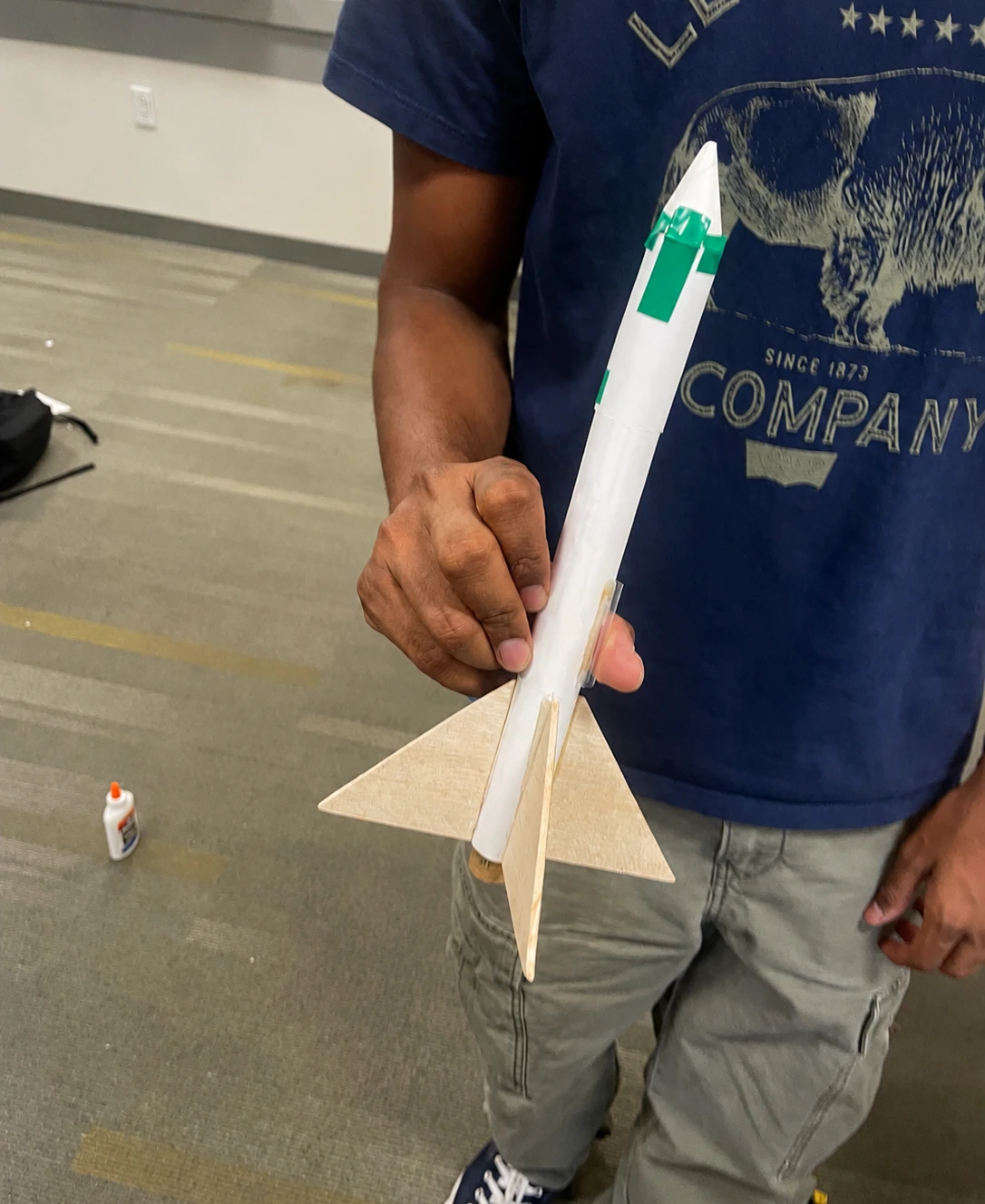
The initial rocket combined a paper body with an internal PVC structure, balsa fins, and a plastic-bag parachute. It established a complete vehicle to build, launch, and evaluate before making a more focused design revision.
Use the first launch to guide a revision
After the first launch, I remodeled the nose to improve its aerodynamic shape. The two design photographs show this change directly. Building and launching the revised version gave the project a complete design–test–redesign cycle.
Let the evidence show the change
The original photographs and both launch recordings preserve the project from construction through testing. Together they show the baseline, the nose revision, and the second flight.
Development process
Two iterations.
01 · Initial design
Build and launch the baseline
Assemble the paper-and-PVC body, balsa fins, and parachute, then complete the first launch.
02 · Redesign
Improve the nose geometry
Remodel the nose for a more aerodynamic shape, build the revised rocket, and launch the second iteration.
The design change
Initial design
A lightweight paper body, internal PVC structure, balsa fins, and a plastic-bag parachute.
Project photographs
A look at the build.
Explore the hardware, design views, and development stages.
- Iteration one: the initial lightweight design.
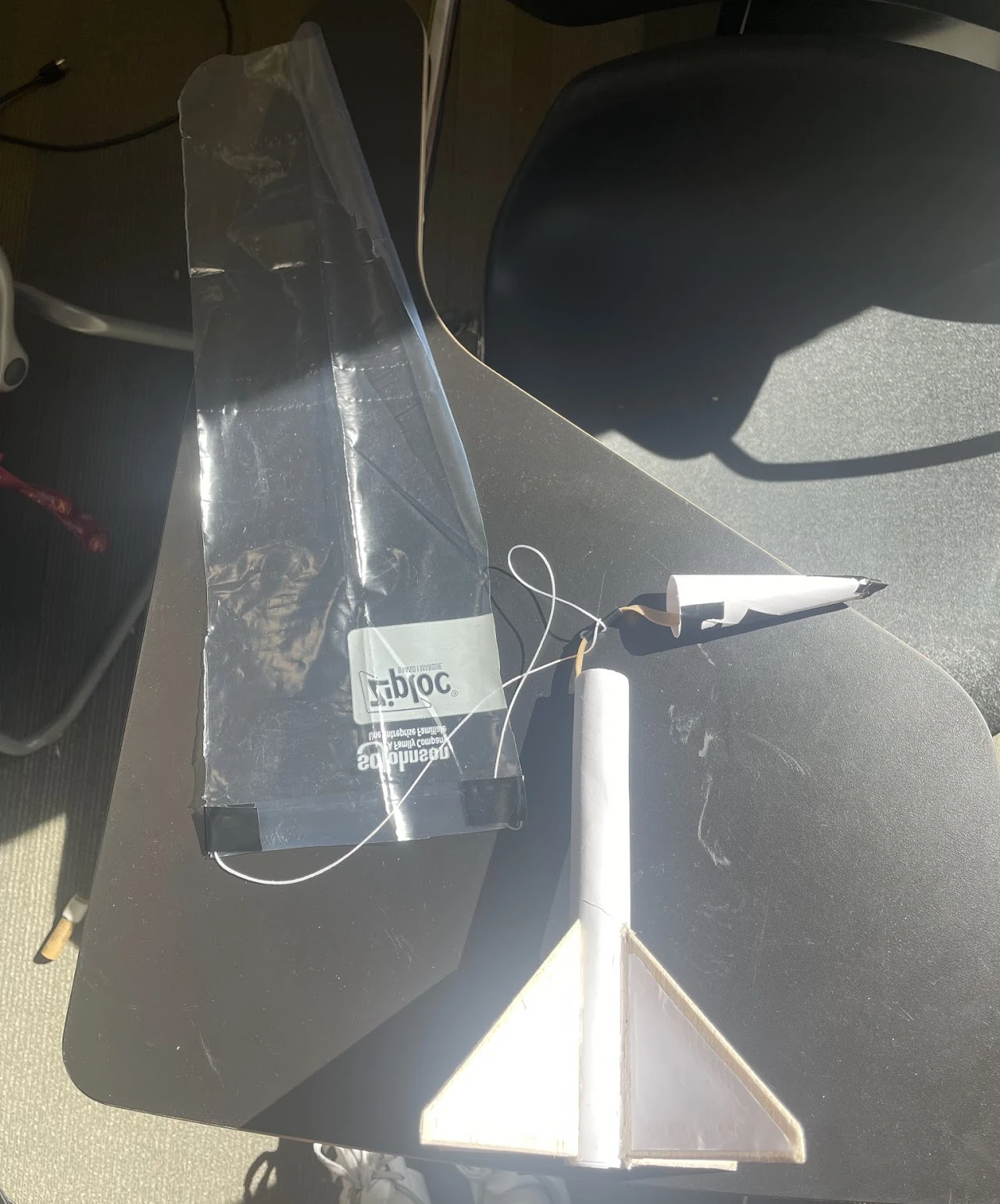
- Iteration two: the remodeled aerodynamic nose.
Demonstrations
See the project
in action.
Original recordings from the USC project documentation.
Second rocket launchOpen original
Play the recordings here, or open them in a separate tab.
Skills developed
Rocket constructionAerodynamic designPrototypingFlight testingDesign iteration